
 Patellar tendonitis, also called jumper’s knee, can creep up almost unnoticed. A little stiffness here, a sharp twinge there, until one day the pain stops you from doing the activities you love. I know, because that’s exactly what happened to me. Years ago, I went from having an NBA-level vertical leap to barely being able to climb stairs without holding onto the railing.
Like many others, I tried doctors, physical therapy, and rest, but nothing worked until I discovered how to strengthen the tendon with the right exercises, while also fixing the biomechanical risk factors that were sabotaging my recovery. Since then, in over 15 years of research on patellar tendonitis, I’ve developed a method that has helped tens of thousands recover.
This article will walk you through what patellar tendonitis is, the symptoms to look out for, and the best exercises for recovery. Along the way, I’ll show you the most common mistakes people make, what science says about treatment options, and how you can take back control of your knees.
Table of Contents
- What Is Patellar Tendonitis (Jumper’s Knee) and Why Exercises Matter
- Patellar Tendonitis Symptoms and When to Start Rehab
- Best Patellar Tendonitis Exercises That Really Work
- Patellar Tendonitis Exercises PDF
- Rehab Protocol for Patellar Tendonitis [PDF Download]
- Stretches and Warm-Ups for Patellar Tendonitis Relief
- Patellar Tendonitis Exercises to Avoid (Don’t Make It Worse)
- Extra Tools That Can Help Alongside Exercises
- How Long Does Patellar Tendonitis Take to Heal With Exercise?
- Patellar Tendonitis Surgery vs. Exercise-Based Rehab
- The Fast & Safe Way to Get Rid of Patellar Tendonitis
What Is Patellar Tendonitis (Jumper’s Knee) and Why Exercises Matter
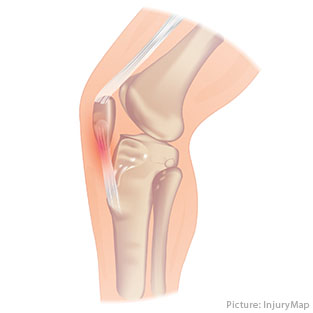
Patellar tendonitis is an overuse injury of the tendon that connects your kneecap to your shinbone. It’s especially common in jumping sports like basketball and volleyball, with prevalence rates over 20% in elite athletes (Nutarelli et al., 2023). Symptoms can last for months or even years if not treated correctly (Challoumas et al., 2021).
Rest alone rarely heals patellar tendonitis. Exercise is the foundation of recovery.
The key thing to understand: rest alone will not heal patellar tendonitis. Tendons need progressive loading with special tendon exercises that stimulate collagen repair and strengthen the tissue (Malliaras et al., 2015).
In my own journey, nothing changed until I stopped relying on rest, massage, and braces. I only got better once I started carefully loading my tendon with the right program. Among those I’ve helped since, the fastest recoveries always came from combining tendon-loading exercises with correcting biomechanical problems and other hidden factors that affect healing speed.

Patellar Tendonitis Symptoms and When to Start Rehab
Patellar tendonitis usually begins with localized pain at the front of the knee, just below the kneecap. Early signs can feel like mild discomfort after training. If ignored, the pain often worsens until it interferes with climbing stairs, squatting, or even sitting for long periods (Muaidi, 2020).
Symptoms include:
- Pain when jumping, sprinting, or landing
- Stiffness after rest
- Tenderness at the lower pole of the patella
- Pain when pressing on the tendon
Too many athletes wait until pain becomes severe before addressing it. In my experience, this is the first mistake: underestimating the injury. By the time I was clinging to stair railings, I had already let things get far worse than they needed to be.
The good news? Research shows that rehab can start as soon as you identify symptoms, and early intervention improves long-term outcomes (Scott et al., 2020).
SELF-CHECK: Press gently on the tendon just below your kneecap. If this reproduces your pain, it’s time to start a structured rehab program.
Best Patellar Tendonitis Exercises That Really Work
Not all exercises are created equal. The most evidence-backed options include eccentric training, heavy slow resistance (HSR), and isometric exercises.
- Eccentric squats on a slant board: Long considered the gold standard, these emphasize controlled tendon loading (Breda et al., 2020).
- Heavy slow resistance training: Shown to improve tendon structure and reduce pain while building strength (Challoumas et al., 2021).
- Isometric holds (like wall sits): Provide short-term pain relief and improve tendon load tolerance (Challoumas et al., 2021).

In my 15+ years of helping people with jumper’s knee, the biggest rehab failures came not from lack of effort, but from poor technique, wrong tempo, or progressing at the wrong speed. Others focus only on the knee itself, ignoring hidden factors like hip weakness, ankle mobility, or lifestyle choices that slow collagen synthesis.
To get rid of tendonitis permanently, you need to:
- Do these exercises correctly (technique)
- Scale them based on your tendon’s strength (progression)
- Work on other factors that influence tendon load and healing (hidden healing blockers)
If pain comes back, it means you’ve neglected at least one of these areas.
“I went from struggling to get out of my car to competing in marathons again thanks to this program.” – Doug Wilson
Patellar Tendonitis Exercises PDF
Sometimes it’s easier to follow a structured plan step by step. That’s why I’ve created a free PDF guide with the best exercises for patellar tendonitis.
This guide includes:
- Clear photos and instructions
- Video demonstrations of correct technique
- A progression plan from pain relief to full strength


You can download it below.
Rehab Protocol for Patellar Tendonitis [PDF Download]
A successful protocol isn’t just “do squats.” It’s about timing, progression, and avoiding setbacks.
Phases of rehab include:
- Pain reduction – Isometrics, activity modification
- Strength building – Eccentric and HSR exercises
- Return to sport – Plyometrics, sport-specific loading
Research shows structured programs can bring 50–70% of athletes back to sport within 3–6 months (Challoumas et al., 2021).
In my work on jumper’s knee, those who follow the Koban-method recover not only faster but more permanently, compared to those who “jump ahead” too quickly.
PDF Download: Rehab Protocol with Patellar Tendonitis Exercises
Stretches and Warm-Ups for Patellar Tendonitis Relief
While stretches don’t heal tendons directly, they can help with pain relief and mobility. Focus on:
- Quadriceps stretches
- Hamstring flexibility
- Calf stretches
A dynamic warm-up that includes hip mobility and core activation also reduces stress on the tendon (Llombart et al., 2024). This article contains a complete list of stretches for patellar tendonitis.

Warning: Quad stretches can irritate weak tendons. Use only once your tendon passes the appropriate strength test.
Patellar Tendonitis Exercises to Avoid (Don’t Make It Worse)
Certain activities can aggravate patellar tendonitis if introduced too early:
- Deep squats with heavy loads
- High-impact plyometrics (box jumps, sprints)
- Sudden spikes in training volume
- Kneeling and kicking

Among the people I’ve helped, one of the most common mistakes is progressing too quickly, either because of over-optimism or frustration. This often resets recovery by weeks or months. That’s why I created progression benchmarks for my Tough Tendons course. If you want to learn more about this, you can get started for free.

Extra Tools That Can Help Alongside Exercises
Adjuncts like braces, straps, and tape can offer temporary relief but don’t replace rehab.
- Patellar tendon straps: Can reduce pain during activity (Muaidi, 2020).
- KT tape: May help with short-term relief.
- Braces: Offer compression but don’t heal the tendon.
- Icing: Useful for pain management instead of Ibuprofen.
Research also shows mixed results for shockwave therapy, PRP injections, and other passive treatments. None of them are as effective as exercise-based rehab (Llombart et al., 2024; Challoumas et al., 2021).
How Long Does Patellar Tendonitis Take to Heal With Exercise?
According to research, average recovery time is 3 to 6 months (Challoumas et al., 2021). Some cases take longer, especially if pain has been ignored for years. My method allows slightly faster recovery times, as 44% of Tough Tendons participants could go back to sports in less than 3 months.
I’ve also seen people recover completely even after years of chronic pain, once they finally followed the Koban-method. For example, Joel Edesi struggled for five years and couldn’t climb stairs without pain, until he used my Tough Tendons course and returned to sports pain-free. Here’s another success story:
“After years of failed treatments, Martin’s program was the only thing that worked for me.” – Benjamin Moser
This shows that with the right approach, you can always get better. The more hidden healing blockers you work on, the faster your recovery will be. But doing random exercises without a structured plan and without deep knowledge about the injury is not enough. Not with patellar tendonitis.
Patellar Tendonitis Surgery vs. Exercise-Based Rehab
Surgery is typically a last resort, and only about 10% of patients end up needing it (Llombart et al., 2024). Studies show that eccentric exercise can achieve similar outcomes to surgery in terms of pain relief and function, without the risks of invasive treatment (Llombart et al., 2024).
In my experience, people who commit fully to rehab almost never need surgery. That’s why my core message is simple: exercise-based rehab is the safest, most effective path for long-term healing.
Discover the Step-by-Step Path to Healing
Are You Making These 5 Tendonitis Rehab Mistakes?
They're so serious that once fixed, many of my clients made breakthrough progress in weeks, after being stuck for months (sometimes years).
I’ll show you the exact mistakes to avoid.
P.S. Don’t let small errors steal months of progress.

“I’m a family physician in my late 70’s and wish I had this material 40 years ago.”
– Dr. Robert Shapter
Breda, S. J., et al. (2020). Effectiveness of progressive tendon-loading exercise therapy in patients with patellar tendinopathy. BMJ Open Sport & Exercise Medicine.
Challoumas, D., et al. (2021). Management of patellar tendinopathy: a systematic review and network meta-analysis of randomised studies. BMJ Open Sport & Exercise Medicine, 7:e001110.
Llombart, R., et al. (2024). The Best Current Research on Patellar Tendinopathy: A Review of Published Meta-Analyses. Sports, 12(46).
Malliaras, P., et al. (2015). Patellar Tendinopathy: Clinical Diagnosis, Load Management, and Advice for Challenging Case Presentations. Journal of Orthopaedic & Sports Physical Therapy.
Muaidi, Q. I. (2020). Rehabilitation of Patellar Tendinopathy. Saudi Journal of Sports Medicine.
Nutarelli, L., et al. (2023). Epidemiology of Patellar Tendinopathy in Athletes and the General Population. Journal of Clinical Medicine.
Scott, A., et al. (2020). ICON 2019 International Scientific Tendinopathy Symposium Consensus: Clinical Terminology and Definitions. British Journal of Sports Medicine.


