
 Patellar tendonitis (jumper’s knee) is one of the most frustrating injuries for athletes. Many turn to KT Tape® (Kinesio tape) as a quick fix, hoping it will reduce pain and support the tendon during training. But does the evidence support its use, or is it more of a placebo effect? In this article, we’ll look at what the science actually says about KT tape for patellar tendonitis, how it compares to other treatments, and what role it should play in your recovery plan.
What Is KT Tape and How Is It Supposed to Help?
KT Tape (short for Kinesio Tape) is an elastic, cotton-based tape that can stretch up to 140% of its original length. Unlike rigid sports tape, KT Tape moves with the skin and is designed to provide sensory feedback, improve proprioception, and reduce strain on injured tissues.
In theory, KT tape for patellar tendonitis works by:
- Lifting the skin slightly to improve blood flow and lymphatic drainage
- Changing proprioceptive feedback to reduce pain perception
- Supporting the patellar tendon mechanically, similar to a strap
Sure, these effects sound promising, but let’s look at what the research says about KT tape for athletes with jumper’s knee?
Does KT Tape Reduce Pain in Patellar Tendonitis?
Research shows that KT tape can indeed provide short-term pain relief, especially during explosive activities.

A 2020 study on athletes with patellar tendinopathy found that KT tape significantly reduced pain during a vertical jump compared to no tape. However, it did not improve pain during squats or isometric knee extension tests (Tamura et al., 2020). This suggests KT tape’s benefit may be activity-specific, like helping most during high strain movements like jumping.
Interestingly, the same study found that jump performance actually decreased slightly under KT tape conditions. This indicates that while KT tape reduces pain, it may also alter normal biomechanics.
Bottom line: KT tape can reduce pain in some situations, but it doesn’t enhance performance and its effects are only temporary.
KT Tape vs. Patellar Straps and Braces: Which Works Better?
If you’re deciding between KT tape, patellar straps, or braces, here’s what the evidence suggests:
- Patellar straps: Shown to decrease localized tendon strain and reduce pain during squats and jumps (Lavagnino et al., 2011; de Vries et al., 2015).
- Braces: Provide broader support, sometimes improving proprioception, but bulkier and less targeted (de Vries et al., 2015).
- KT tape: Offers flexible support and pain reduction during dynamic activities like jumping (Tamura et al., 2020), but performance trade-offs are possible.
Here’s a comparison Table: KT Tape vs. Strap vs. Brace
| Feature | KT Tape | Patellar Strap | Knee Brace |
| Pain relief | Yes, especially during jumping | Yes, consistent in squats/jumps | Yes, but less studied |
| Performance impact | May reduce jump height slightly | No negative effect reported | May feel bulky in fast movements |
| Reusability | Single-use, disposable | Reusable for months | Reusable |
| Support type | Flexible, skin-level feedback | Targeted pressure on tendon | Broader joint stabilization |
| Cost-effectiveness | Moderate (repeat purchase) | Very cost-effective | Higher cost |
| Evidence base | Small, mixed studies | Stronger evidence for pain relief | Limited compared to straps |
Practical takeaway: Straps are cheaper and reusable, braces provide stability, KT tape is versatile but disposable and less studied for long-term use.
How to Apply KT Tape for Jumper’s Knee
If you want to try KT tape for patellar tendonitis, proper application is key. The most common method involves:
- Facilitative Y-Strip applied to the vastus medialis oblique (VMO) muscle with 25–35% stretch.
- Corrective I-Strip placed horizontally across the patellar tendon with 75–100% stretch.
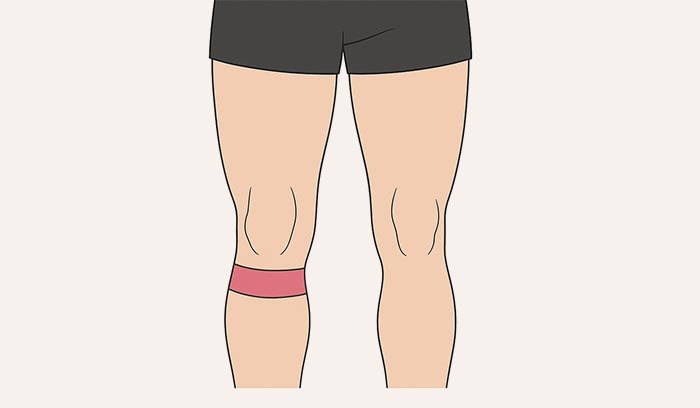
This combination has been shown to reduce pain during jumping (Tamura et al., 2020).
Tip: Always clean the skin before applying, avoid shaving right before taping, and remove the tape if irritation occurs. KT tape should not replace rehabilitation exercises. It’s best used for short-term pain relief during sport.
The Limitations of KT Tape
While KT tape can be useful, there are clear limitations:
- Temporary effects: Pain reduction lasts only as long as the tape is applied.
- Performance trade-offs: Some studies show reduced jump height with tape.
- No tendon healing: Like straps and braces, KT tape does not repair tendon tissue. It only alters load and pain perception.
- Small sample sizes: Current studies often include fewer than 20 participants, limiting reliability.

The Bottom Line: Should You Use KT Tape for Patellar Tendonitis?
KT tape can be a helpful tool for pain management, especially during high-strain sports like basketball or volleyball. It may allow you to train or compete with less discomfort. However, it should never be seen as a cure.
True recovery from patellar tendonitis requires progressive tendon loading exercises that restore tendon structure and strength. KT tape can make this process more tolerable, but it cannot replace it.
The Hidden Key to Healing Patellar Tendonitis Fast
In my free email course, I’ll show you the proven system athletes use to eliminate jumper’s knee and return to pain-free training.
Thousands have already uncovered this method and rebuilt stronger, pain-free knees. Yours could be next.

de Vries, A. J., Zwerver, J., Diercks, R. L., Tak, I. J. R., van Berkel, S., van Cingel, R., van der Worp, H., & van den Akker-Scheek, I. (2015). Effect of patellar strap and sports tape on pain in patellar tendinopathy: A randomized controlled trial. Scandinavian Journal of Medicine & Science in Sports, 26(10), 1217–1224. https://doi.org/10.1111/sms.12560
Lavagnino, M., Arnoczky, S. P., Dodds, J., & Elvin, N. (2011). Infrapatellar straps decrease patellar tendon strain at the site of the jumper’s knee lesion: A computational analysis based on radiographic measurements. Sports Health, 3(3), 296–302. https://doi.org/10.1177/1941738111400547
Tamura, K., Resnick, P. B., Hamelin, B. P., Oba, Y., Hetzler, R. K., & Stickley, C. D. (2020). The effect of Kinesio Tape on pain and vertical jump performance in active individuals with patellar tendinopathy. Journal of Bodywork & Movement Therapies, 24(2), 118–125. https://doi.org/10.1016/j.jbmt.2020.02.005


